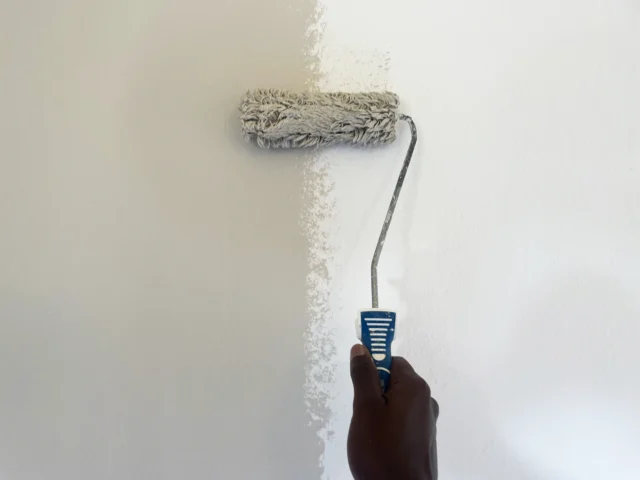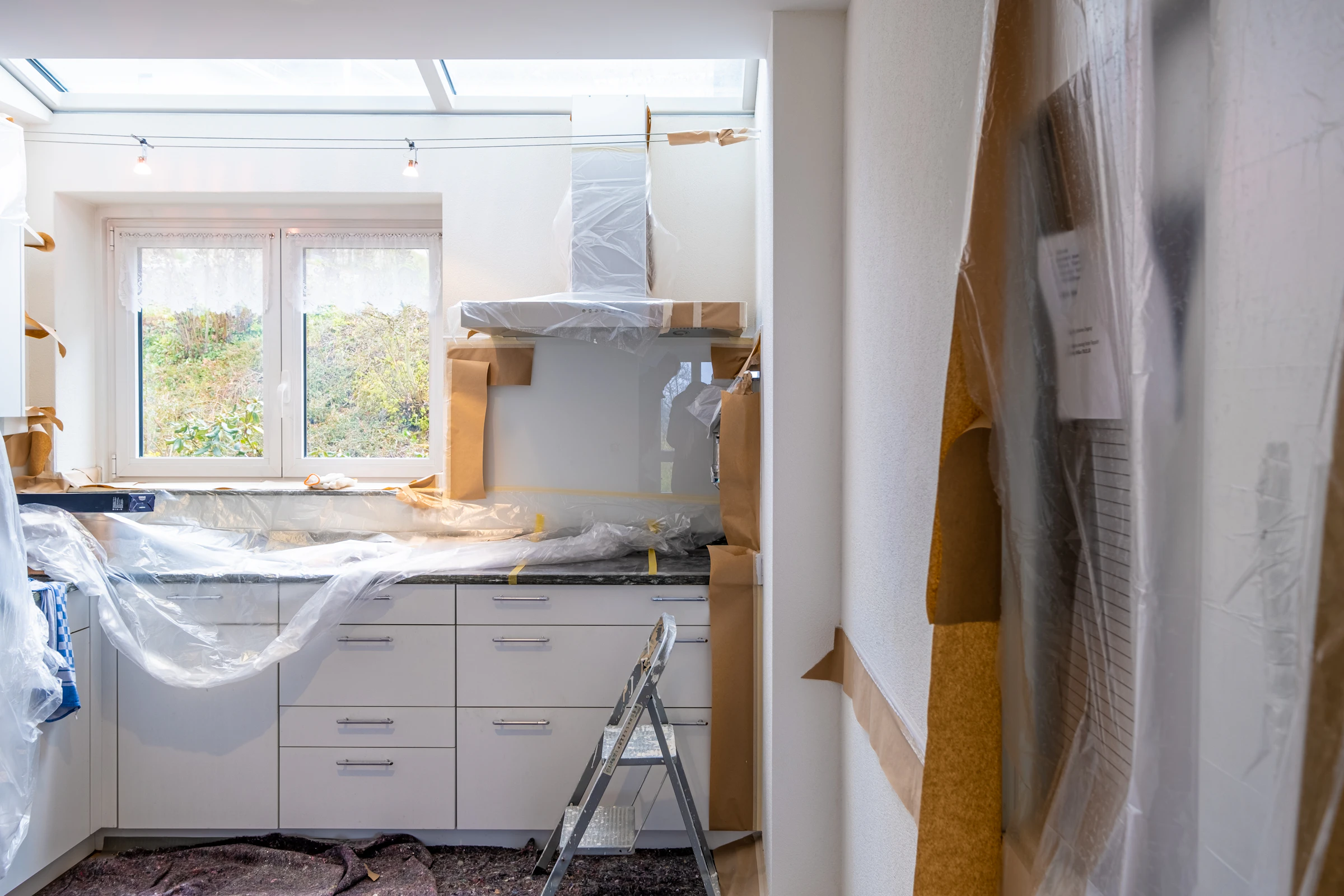
The best way to protect your home from dust during renovation is to seal off the work area, cover anything that can’t be moved, protect the route builders use through the house and control airflow so dust doesn’t drift into other rooms. A few hours of preparation before work starts can save days of cleaning afterwards.
Construction dust is far finer than household dust. It slips through gaps under doors, settles inside cupboards and can clog a household hoover within minutes. From a kitchen refit in a Victorian terrace in Hull to an extension on a family home elsewhere in East Yorkshire, the same principles apply.
Key takeaways
- Agree dust control with your builder before work starts, including who provides screens and floor protection.
- Seal the work area with zip-door dust screens or taped polythene, and block gaps under doors.
- Empty rooms of anything that can be moved, and wrap what can’t.
- Some dust will always escape, so plan a professional clean for when the work is completely finished.
Talk to your builder before work starts
Most good builders put down some protection, but the standard varies. Ask at the quote stage:
- Will they put up dust screens or zip doors around the work area?
- Do their power tools have dust extraction, and do they use a proper site dust extractor rather than a household vacuum?
- Can cutting of tiles, brick and timber be done outside?
- Will they protect floors along the route from the door to the work area?
- How will they tidy up at the end of each day, and what will the site look like when they leave?
Cutting brick, concrete, stone and some tiles produces silica dust, which is harmful to breathe. Employers and contractors have legal duties to control hazardous dust, and the Health and Safety Executive’s COSHH guidance explains the rules. Keep children, pets and anyone with breathing problems well away from cutting work.
It’s also worth confirming that the builder’s end-of-job clean is a basic tidy, then planning a proper after builders clean for when they leave.
How to seal off the work area
- Fit zip-door dust screens or polythene sheeting over doorways into the work area, taped to the frame on all sides.
- Close internal doors to other rooms and block the gap at the bottom with a draught excluder or rolled-up old towel.
- Tape around loft hatches and cupboard doors in and near the work area so dust can’t settle inside.
- Cover extractor fan grilles and cooker hoods in the work area so they don’t pull dust into ducts and filters.
- Keep smoke alarms working. Dust can set them off, and some builders cover the alarm in the work area while they’re cutting or sanding. If so, make sure it’s uncovered at the end of every working day.
Tip: Use low-tack decorator’s tape on painted walls and door frames. Parcel tape and duct tape can pull paint off when they’re removed weeks later.
How to protect floors, carpets and stairs
Floors take the most punishment, especially the route between the front door and the work area.
- Carpets: self-adhesive carpet protection film is designed for exactly this and stops grit being ground into the pile. Lay it on stairs and landings too.
- Hard floors: use corrugated plastic sheets or hardboard taped at the joints. Grit trapped under a thin dust sheet can scratch wood, laminate and vinyl as people walk over it.
- Doormats: put a sturdy mat inside and outside the entrance the trades use, and shake it out every day.
Even with protection, carpets near the work area often need a proper clean at the end. Hot water extraction lifts the fine dust that settles deep in the pile; our guide to carpet cleaning methods explains why it outperforms a surface clean, and our carpet and upholstery cleaning team can do it once the builders have gone.
Clear and cover furniture and belongings
- Move everything you can out of the work area and the rooms next to it. Fine dust travels further than you’d expect.
- Pack ornaments, books and clothes into lidded plastic boxes rather than open cardboard boxes.
- Wrap sofas and mattresses in plastic furniture covers, not just fabric sheets. Plaster dust works into upholstery and is hard to get out.
- Take down curtains and blinds where you can, and bag them.
- Protect TVs, computers and games consoles, as dust gets into vents and fans.
- If the kitchen is near the work, keep food, crockery and utensils in sealed containers or another room.
Manage airflow and ventilation
Dust goes wherever the air goes, so use that to your advantage:
- Open a window in the work area so air, and dust, flows out of the house rather than into it.
- Keep other rooms’ windows closed so you’re not drawing a draught through the house from the work area.
- Turn off extractor fans in rooms next to the work area, as they can pull dust through gaps under doors.
- An air purifier with a HEPA filter in the main living space helps if someone in the house has asthma or allergies.
Daily habits that keep dust under control
- Ask trades to use the same route through the house each day.
- Vacuum rather than sweep. Sweeping throws fine dust back into the air. Empty the vacuum and clean its filter often, because plaster dust clogs filters fast and can make the motor overheat.
- Damp-wipe surfaces outside the work area every few days with a well-wrung microfibre cloth.
- Keep pets out of the work area and wipe their paws, as dust on fur ends up everywhere. Our guide to cleaning a home with pets has more ideas.
- Change clothes and shoes after spending time in the work area.
Renovating older homes in Hull and East Yorkshire
Victorian and Edwardian terraces, like those on the Avenues and off Hessle Road in Hull, often have lath-and-plaster ceilings and walls, which create a huge amount of dust when they come down. Opening up old chimney breasts can release years of soot too. In these homes, seal the work area even more carefully and keep protection in place until all the old plaster has been bagged and taken away.
Period properties, such as many in Beverley, can also hide materials that need specialist handling. Homes built before 2000 may contain asbestos, and older paintwork can contain lead. If you suspect either, stop and get professional advice before anything is sanded, drilled or removed.
Getting your home back after the builders leave
However careful everyone is, some dust escapes, and it keeps settling for days after the work stops. Plan the clean-up in this order:
- The builder removes waste and tools and takes down screens and sheeting.
- Snagging and touch-ups are finished.
- A professional after builders clean is done, top to bottom.
- Carpets and upholstery are cleaned if needed.
- Furniture and soft furnishings go back in.
Our after builders cleaning page explains what to expect, and removing plaster dust and paint splashes covers DIY tidying after smaller jobs. If dust has spread through the rest of the house, a deep clean of the untouched rooms brings everything back to normal.
Our team is insured, brings all its own equipment and agrees a fixed quote before starting. Read more about our after builders cleaning service, or get in touch with your expected finish date and we’ll pencil in a clean.