An end of tenancy cleaning checklist covers every surface a letting agent will inspect at check-out: inside the oven and appliances, limescale in the bathroom, cupboards inside and out, skirting boards, doors, windows and floors. The goal is to return the property in the same condition as the check-in inventory, allowing for fair wear and tear.
We’ve built this room-by-room list from the checklists that letting agents and inventory clerks across Hull and East Yorkshire use. Work through it in order, top to bottom, and you’ll catch the jobs that most often lead to deposit deductions.
If you’d rather hand it over, our end of tenancy cleaning service follows the same checklist. Everything below is written so you can do it yourself.
Key takeaways
- Your check-in inventory is the benchmark: you only need to match it, allowing for fair wear and tear.
- The kitchen and bathroom are where inspectors look hardest, so give them the most time.
- Clean top to bottom in every room: ceilings and high shelves first, floors last.
- Leave time for drying, a final walk-round and dated photos before you hand back the keys.
Before you start: supplies and the right order
A thorough end of tenancy clean is a long job, so gather everything before you begin. You’ll need:
- Plenty of microfibre cloths and a non-scratch scourer
- A multi-purpose cleaner, degreaser, limescale remover and glass cleaner
- Oven cleaner or a bicarbonate of soda paste, plus rubber gloves
- A hoover with crevice and brush attachments, and a mop and bucket
- An extendable duster for ceilings, coving and light fittings
- Bin bags and a step ladder for high cupboards
Work top to bottom so dust falls onto areas you haven’t cleaned yet, and finish each room by doing the floor as you back out of the door. Start with the kitchen, because it takes longest and degreasers work better when they’re left to soak.
Tip: Find your check-in inventory before you start. If it says the oven was professionally cleaned or the carpets were freshly cleaned, that’s the standard you’ll be measured against.
Kitchen end of tenancy cleaning checklist
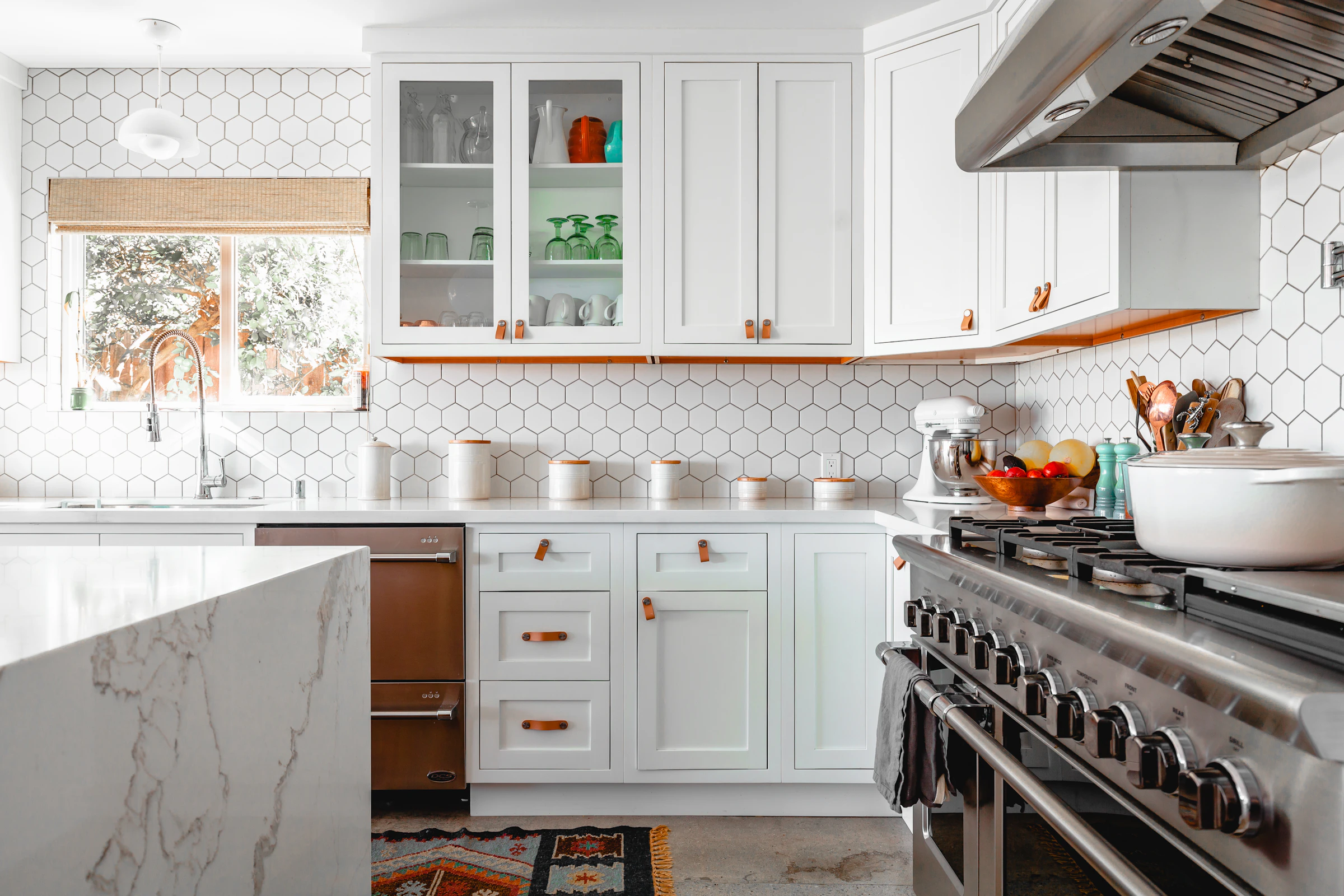
The kitchen gets the closest look at check-out, because grease and crumbs are easy to spot and photograph. Work through it in this order:
- Oven and hob: remove racks, trays and the inner door glass if it comes out. Degrease the inside, the door, the seals and the hob, including under burner caps. Our guide on how to clean an oven properly covers the DIY methods step by step.
- Extractor hood: wipe the canopy and soak or replace the grease filters.
- Fridge and freezer: empty, defrost if needed, wash shelves and drawers, wipe the seals and leave the door ajar if the power is going off.
- Cupboards and drawers: empty them, then wipe inside, outside, the tops and the handles. Crumbs in drawer corners are a classic deduction.
- Worktops and splashback: degrease, then clean the grout lines and the sealant along the back edge.
- Sink and taps: descale the taps, clean the plughole and overflow, and polish the drainer.
- Appliances: microwave inside and out, dishwasher filter and door seals, washing machine drawer and door seal, tumble dryer filter.
- Walls, switches and floor: spot-clean splashes, wipe sockets and switches, clean behind and under any appliances you can move, then mop.
Ovens are the job most people underestimate. If yours has years of baked-on carbon, a dedicated professional oven clean with fume-free, non-caustic products can save you an afternoon of scrubbing.
Bathroom and toilet checklist
Bathrooms are checked for limescale, soap scum, mould and hair. Much of Hull and East Yorkshire has hard water, so scale builds up quickly around taps, shower screens and toilet bowls. Our hard water and limescale guide explains which products work without damaging chrome.
- Descale and polish taps, shower heads, shower screens and plugholes
- Clean the bath, shower tray and basin, including the overflows
- Scrub the grout, wipe the silicone sealant and treat any black mould spots
- Clean the toilet inside and out, including the base, hinges and behind the pedestal
- Wipe tiles, the mirror, cabinets inside and out, towel rails and the light pull
- Clean the extractor fan cover, which is often thick with dust
- Mop the floor, working into the corners and behind the toilet
Silicone that’s stained deep inside may not come clean. Photograph it: discolouration from age can count as fair wear and tear rather than a cleaning failure.
Bedrooms and living areas checklist
These rooms look simple, but inspectors check the details: the tops of door frames, inside wardrobes and along every skirting board.
- Dust ceilings, coving and corners for cobwebs
- Clean light fittings, lampshades, switches and sockets
- Wipe doors, door frames and handles on both sides
- Dust and wipe skirting boards, picture rails and radiators, including behind and between the panels
- Empty and clean inside wardrobes, drawers and any furniture provided by the landlord
- Clean the insides of windows, plus sills, frames and tracks; wipe blinds and check curtains
- Remove Blu Tack and marks from walls where you can do so without damaging the paint
- Hoover carpets thoroughly, including the edges and under beds and sofas
If the inventory notes that carpets were cleaned before you moved in, a hoover won’t be enough. Our advice on removing common carpet stains helps with small marks, or you can book hot water extraction carpet cleaning for the whole property.
Hallways, stairs and outside areas
- Hoover the stairs edge to edge and wipe the banisters and spindles
- Clean the front door, letterbox and door furniture, and wipe inside the meter cupboard
- Clear the understairs cupboard, loft and any shed of belongings
- Sweep porches, paths and yards, then empty and rinse the bins, timing it around bin day so they aren’t left full
- Leave the garden or yard as the inventory describes, with all rubbish removed
Many Hull terraces, from the Avenues to the streets off Holderness Road, have back yards and shared alleyways. Anything left out there, from old furniture to bags of rubbish, is likely to be charged for removal.
Common end of tenancy cleaning mistakes
Most cleaning deductions come from the same handful of missed jobs:
- Cleaning the oven interior but forgetting the racks, door glass and grill pan
- Leaving limescale on taps and shower screens
- Missing the tops of kitchen cupboards, door frames and wardrobes
- Not pulling out the fridge, cooker or washing machine to clean behind them
- Switching off the fridge and closing the door, which leads to mould and smells
- Starting the clean on the last day, with no time to fix problems
Our guide to what letting agents check at check-out explains how inspectors work through a property, so you know where they’ll look first.
Final checks before you hand back the keys
- Walk through every room with the check-in inventory and compare each item.
- Take dated photos and video of every room, including inside appliances and cupboards.
- Open windows to help floors and fabrics dry, then close and lock them.
- Take meter readings and remove every last belonging.
- Return all keys and get a receipt or email confirmation.
Plan your time carefully. Our breakdown of how long an end of tenancy clean takes shows why a family house often needs a full day or more. A thorough clean and good evidence are the two things that matter most when it comes to getting your deposit back in full.
Need a hand with your end of tenancy clean?
If time is short or the oven has beaten you, our team can take the whole checklist off your hands. Every end of tenancy clean in Hull and across East Yorkshire, from Beverley to the coast, follows letting-agent and inventory checklists. We agree a fixed quote before we start, our cleaners bring their own equipment and products, and our re-clean guarantee covers anything that isn’t right.
Find out more about our end of tenancy cleaning, or get in touch for a fixed quote.