UK businesses must keep their workplace, furniture and fittings sufficiently clean under the Workplace (Health, Safety and Welfare) Regulations 1992, and must control the risks from hazardous cleaning chemicals under COSHH. Toilets and washing facilities must be kept clean, floors kept free of slip hazards so far as reasonably practicable, and waste must not be allowed to build up.
The law doesn’t set a cleaning schedule or tell you which products to use. It sets standards and leaves you to decide how to meet them, usually through a risk assessment and a sensible cleaning routine.
This guide explains what workplace cleaning regulations mean in practice for offices, shops and other premises in Hull and East Yorkshire. It’s general information for businesses in England, not legal advice.
Key takeaways
- The Workplace Regulations 1992 require workplaces, furniture and fittings to be kept sufficiently clean.
- Toilets and washing facilities must be kept clean, with soap and a way to dry hands.
- COSHH applies to hazardous cleaning products, whoever does the cleaning.
- Using a contractor doesn’t remove your own duties, so check their paperwork and agree a specification.
What the law says about workplace cleaning
The starting point is the Health and Safety at Work etc. Act 1974, which requires employers to ensure, so far as reasonably practicable, the health, safety and welfare of their employees and of other people affected by their work. More specific rules sit underneath it:
- Workplace (Health, Safety and Welfare) Regulations 1992: cleanliness, toilets, washing facilities, floors and waste.
- Control of Substances Hazardous to Health Regulations 2002 (COSHH): safe use and storage of hazardous cleaning chemicals.
- Management of Health and Safety at Work Regulations 1999: risk assessments, including for cleaning activities.
Most businesses meet these duties through a mix of their own procedures and a professional commercial cleaning contractor working to an agreed specification.
What does “sufficiently clean” mean under the Workplace Regulations?
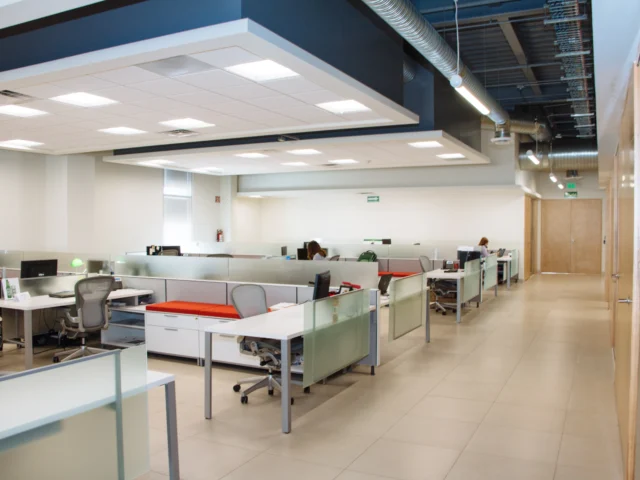
The Workplace Regulations say that workplaces, and the furniture, furnishings and fittings in them, must be kept sufficiently clean. The surfaces of floors, walls and ceilings must also be capable of being kept sufficiently clean. There’s no single fixed standard: HSE’s guidance explains that the level of cleanliness needed depends on how the workplace is used.
In practice, a kitchen or washroom needs cleaning far more often than a store room, and a busy reception more often than a quiet back office. A written schedule, like our office cleaning checklist, is the simplest way to show you’ve thought it through.
Toilets and washing facilities
Employers must provide suitable and sufficient toilets and washing facilities, kept clean and in an orderly condition. Washing facilities need hot and cold, or warm, running water, soap or another suitable means of cleaning, and towels or another suitable way of drying hands.
Floors and slips
So far as reasonably practicable, floors and traffic routes must be kept free from anything that could cause someone to slip, trip or fall. That affects how cleaning is done as well as how often: wet floors should be signed, cleaned when footfall is low and dried where possible.
Waste
Waste must not be allowed to accumulate in a workplace except in suitable receptacles. Bins should be emptied regularly and the bin store kept tidy. Separately, businesses have a duty of care for their waste, which includes using a registered waste carrier to take it away.
COSHH: using cleaning chemicals safely
Many everyday cleaning products, such as bleach, strong descalers, oven cleaners and some disinfectants, are hazardous substances. COSHH requires employers to assess the risks from them and prevent or adequately control exposure.
- Keep safety data sheets for the products you use.
- Carry out a COSHH assessment covering how each product is used, stored and disposed of.
- Choose less hazardous products where they do the job.
- Provide gloves and other protective equipment where the assessment says they’re needed.
- Train staff to use products correctly and never to mix them.
- Store chemicals in their original, labelled containers, away from food.
The HSE’s COSHH pages explain each step in detail. Switching to gentler products can also reduce risk.
Risk assessments for cleaning
Under the Management of Health and Safety at Work Regulations 1999, employers must assess the risks to employees and others, including risks from cleaning. Businesses with five or more employees must record the significant findings.
For cleaning, a risk assessment typically covers:
- Slips on wet floors and trips over trailing cables
- Exposure to cleaning chemicals
- Manual handling of equipment and waste
- Working at height when dusting or cleaning high surfaces
- Lone working for cleaners in the building out of hours
Hygiene risks belong in the picture too, such as how often door handles, kitchens and toilets are cleaned when illness is going round.
Who is responsible when you use a cleaning contractor?
Bringing in a contractor shares the work, but it doesn’t hand over all of your legal duties. The business or person in control of the premises is still responsible for making sure the workplace is kept clean and safe. The contractor is responsible for its own staff, its methods and the products it brings on site.
Both sides should share information. You tell the contractor about site risks, such as alarm systems, restricted areas or known hazards; they give you their risk assessments, COSHH assessments and method statements. Check their insurance and staff vetting before signing, and see our guide to choosing a commercial cleaning contractor for what to ask.
Tip: Keep a copy of your contractor’s insurance certificates, risk assessments and COSHH assessments on file, and ask for updated versions when they renew or change products.
Extra rules for food businesses and shared buildings
Food businesses
Cafés, restaurants, takeaways and other food businesses must also meet food hygiene law, which requires premises and equipment to be kept clean and in good repair. Cleaning schedules are normally part of a food safety management system, and environmental health officers check them during inspections that feed into food hygiene ratings.
Shared and multi-let buildings
In buildings with several tenants, the landlord or managing agent is usually responsible for cleaning common parts such as entrances, stairs and lifts, depending on what the leases say. Residential blocks and HMOs have their own rules; our guides to HMO cleaning responsibilities and how often communal areas should be cleaned explain them, and our communal area cleaning covers both.
Who enforces the rules?
Depending on the type of premises, health and safety law is enforced either by the HSE or by the local council. For offices and shops it’s usually the council’s environmental health team: Hull City Council in the city, or East Riding of Yorkshire Council for towns such as Beverley and Bridlington.
How to show your workplace is kept clean
If an inspector, insurer or employee asks how you meet your cleaning duties, these records give a clear answer:
- A written cleaning specification or schedule for each area
- Signed cleaning logs, especially for toilets and kitchens
- COSHH assessments and safety data sheets
- Risk assessments covering cleaning activities
- Your contractor’s insurance certificates and method statements
- Records of periodic deep cleans and any follow-up after complaints
Review them at least once a year, and whenever your premises or the way you use them changes.
Meeting your workplace cleaning duties
Our commercial cleaning and office cleaning services work to a written specification agreed with you, carried out by insured, vetted and DBS-checked cleaners who bring their own equipment and products. We work out of hours across Hull and East Yorkshire, with fixed quotes agreed before work starts.
To talk through what your premises need, contact our team.