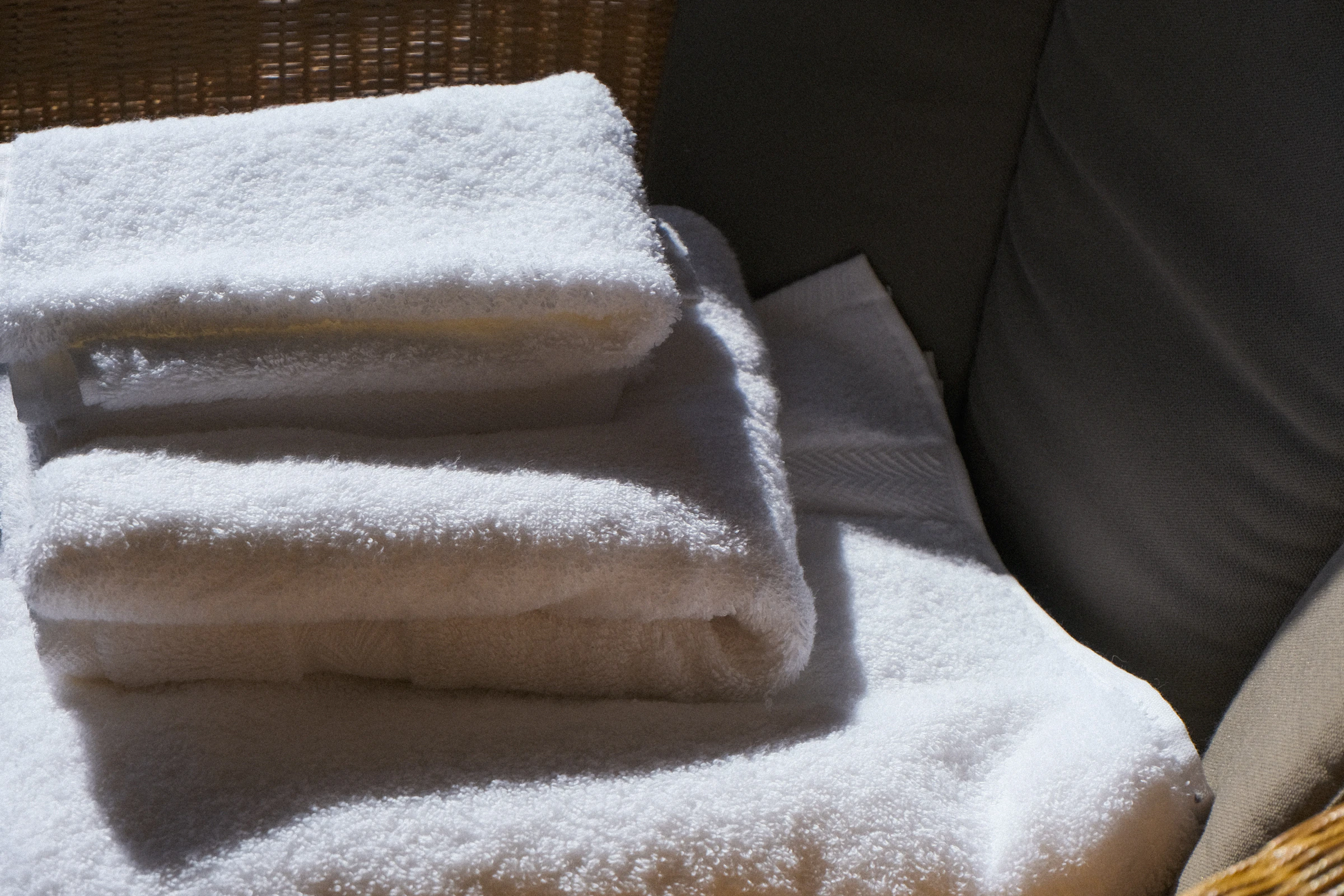
Holiday let linen becomes manageable with a simple rule of thumb: keep three sets per bed, one on the bed, one in the wash and one clean on the shelf, plus plenty of spare towels. Add a fixed washing routine and a reliable way of drying, and same-day changeovers stop being a scramble.
Laundry is where changeovers tend to fall behind. A wash that won’t dry on a damp day in Bridlington, or a cottage near Driffield with back-to-back weekend bookings, can delay check-in more easily than any cleaning task. This guide covers how much linen you need, how to wash and dry it, and whether to hire or buy.
Key takeaways
- Keep at least three sets of bed linen per bed, and more towels than you think you need.
- Choose white, hard-wearing cotton or poly-cotton that can be washed hot and stays bright.
- Wash bedding and towels at 60°C where the label allows, and never store linen that is even slightly damp.
- Linen hire saves time; owning your own gives you control. Choose based on your bookings and storage.
How many sets of linen does a holiday let need?
Three sets per bed is the minimum that works for regular changeovers: one in use, one being laundered and one ready to go. With back-to-back bookings in summer, or if laundry is done off site and takes a day or two to come back, a fourth set gives you breathing space.
For each bed, plan for:
- Fitted sheets, duvet covers and pillowcases, with extra pillowcases as they mark more easily.
- Two mattress protectors and enough pillow protectors to swap them when needed.
- A spare duvet and pillows, so one set can be cleaned without leaving the bed short.
For each guest, allow a bath towel and a hand towel per stay, plus a beach towel if you offer them, and multiply by three. Add bath mats, tea towels and cleaning cloths to the count. If someone else handles your changeovers, such as a holiday let cleaning service, agree where spare stock is kept and who tops it up.
Choosing holiday let linen that survives frequent washing
Holiday let linen is washed far more often than bedding at home, so durability matters most.
- Go white. White linen can be washed hot, looks fresh in photos and makes marks easy to spot before it goes on a bed.
- Pick a hard-wearing fabric. Percale cotton feels crisp, while poly-cotton blends dry faster and crease less, which helps on tight turnarounds.
- Standardise sizes. Buying the same range for every bed makes sorting and counting much faster.
- Mark bed sizes. A coloured stitch or laundry marker on the label, such as blue for king and red for double, saves unfolding sheets to check.
- Choose quick-drying towels. Very thick towels feel luxurious but can take much longer to dry.
Grey or bobbled linen quickly drags down reviews, as we explain in our guide to getting five-star cleanliness reviews. Replace it as soon as it looks tired.
Washing holiday let linen: temperatures and routine
Bed linen and towels should be washed at 60°C between guests where the care label allows. A hot wash with a good detergent gives a hygienic reset for the next guest and keeps white linen looking bright.
| Item | Suggested wash | Notes |
|---|---|---|
| Sheets, duvet covers, pillowcases | 60°C every stay | Check for stains before washing, as heat can set some marks |
| Bath towels, hand towels, bath mats | 60°C every stay | Go easy on fabric conditioner, which can reduce absorbency over time |
| Tea towels and cloths | 60°C every stay | Wash separately from bed linen |
| Mattress and pillow protectors | Per care label, whenever marked and on a regular schedule | Some waterproof protectors need a lower temperature |
| Duvets and pillows | Per care label, periodically | Large items may need a bigger machine or a launderette |
| Throws and cushion covers | Per care label, regularly | Easy to forget, but guests notice marks |
Don’t overload the machine, as linen needs room to move to come out clean. Measure detergent rather than guessing, because too much leaves a residue that can irritate skin. Regular hot washing also helps guests with allergies, because it reduces dust mites.
Drying and ironing on tight turnarounds
Drying is usually the bottleneck. A washing line can’t be relied on at the coast or in winter, and linen that comes in slightly damp will smell musty by the next changeover.
- Use a tumble dryer. For a busy let, a reliable tumble dryer is close to essential. Clean the lint filter after every load.
- Dry completely. Never fold or store linen that feels cool or damp, as it can develop mildew in the cupboard.
- Fold straight from the dryer. Taking linen out promptly and folding it while warm cuts creases and ironing time.
- Iron what shows. Pillowcases and the top edge of duvet covers make the most difference in photos and on arrival.
- Store it well. Keep clean linen in a dry, ventilated, lockable cupboard, not in a damp outbuilding.
Damp storage is a particular problem by the sea, and our guide to cleaning a seaside property has advice on keeping coastal lets dry.
Tip: Store each bed’s complete set inside one of its own pillowcases. Whoever does the changeover grabs one bundle per bed and knows everything matches.
Dealing with stains and damaged linen
Stains are inevitable. The key is to treat them before the first hot wash, as heat can set blood and some make-up for good.
- Blood: rinse in cold water as soon as possible, then wash as normal.
- Make-up and fake tan: pre-treat with washing-up liquid or a stain remover, working it in gently before washing.
- Red wine, tea and coffee: blot, rinse with cold water and pre-treat.
- Rust or grey marks: often caused by damp storage or an old machine. Retire badly marked items rather than putting them back on a bed.
Keep a separate bag for anything stained, torn or thinning, so you can see when stock needs topping up.
Linen hire or owning your own: which is better?
Linen hire
- Clean, pressed sets are delivered and dirty sets collected, saving hours of washing.
- There is no need for a washing machine, tumble dryer or large storage space at the property.
- You have less control over quality and depend on delivery days fitting your bookings.
- Some providers have minimum orders or contracts, so compare terms carefully.
Owning your own linen
- You have full control over quality, colour and how it looks in your photos.
- It is flexible around last-minute bookings, with no delivery schedule to work to.
- It needs time, a good washer and dryer, and storage space.
- You pay for replacements as items wear out.
One property with steady bookings often suits owning your linen; several lets, or properties without laundry facilities, may suit hire.
Fitting laundry into your changeover routine
- Strip all the beds and gather the towels as the first job of the changeover.
- Start the first wash immediately, or bag linen for the hire collection.
- Remake the beds from your clean stock, not the laundry you have just started.
- Move washing to the dryer as each load finishes while you carry on cleaning.
- Fold and store dry linen before you leave, and note any items running low.
Our holiday let changeover checklist shows where laundry fits alongside the rest of the clean. For caravans without a washing machine, or ones closed over winter, see the static caravan cleaning guide; taking linen home at the end of the season stops it getting damp.
Help with holiday let changeovers in East Yorkshire
Linen is just one part of a smooth turnaround. Our holiday let and Airbnb cleaners make up beds to your standard, check stock and report anything that needs replacing, and they work around your laundry arrangements whether you use a hire service or keep linen on site. We cover coastal lets, town flats and countryside cottages from Bridlington to Pocklington, and can add a periodic deep clean between seasons.
Every job comes with a fixed quote agreed in advance. Contact us to talk through your property and booking pattern.