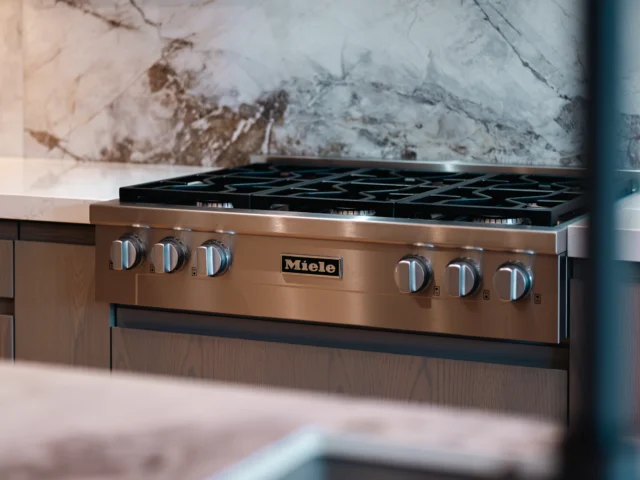
A kitchen deep clean goes well beyond worktops and the hob. It means emptying and washing the cupboards, degreasing the extractor and its filters, cleaning inside and behind appliances, descaling taps and the kettle, and finishing with the floor, including under the kickboards. Work from top to bottom so grease and crumbs never land on surfaces you’ve already finished.
In Hull and East Yorkshire, hard water adds limescale to the list: on taps, in the kettle and inside the dishwasher. This checklist covers all of it, in the order that saves the most time.
It’s the same checklist our cleaners work through on a professional deep clean, so you can use it to do the job yourself or to see what a professional kitchen clean should include.
Key takeaways
- Clean top to bottom: tops of cupboards and the extractor first, floor last.
- Metal extractor filters can be degreased; charcoal filters can’t be washed and need replacing.
- Match the product to the worktop: acids damage natural stone, and abrasives scratch laminate and stainless steel.
- Leave the oven until you’ve decided whether to tackle it yourself or book it separately.
Before you start: kit and the order of work
A kitchen deep clean usually takes most of a day for one person, so it’s worth setting up properly.
- Degreaser or washing-up liquid in hot water, plus soda crystals for heavy grease
- Limescale remover or citric acid
- Microfibre cloths, a non-scratch scourer and an old toothbrush
- A plastic scraper and, for ceramic or induction hobs, a hob scraper
- Rubber gloves, bin bags, a step stool and a bucket
Clear the worktops, run the dishwasher empty if it needs cleaning, and switch the extractor off at the isolator before you begin. Then follow this order: high areas and extractor, cupboards, appliances, worktops and sink, then floors.
Cupboards, drawers and the tops of wall units
- Tops of wall cupboards: grease mixes with dust here to form a sticky layer. Soften it with hot water and degreaser, then wipe it off. Lining the tops with paper makes future cleans easy.
- Inside, one cupboard at a time: empty it, check dates, vacuum the crumbs out and wash the shelves with warm soapy water. Dry thoroughly before putting things back.
- Doors, handles and edges: doors near the hob collect a film of grease. Wipe the edges and hinges as well as the fronts.
- Drawers: empty the cutlery tray, wash it, and vacuum out the drawer and runners.
- Kickboards: many unclip. Remove them and vacuum the dust and crumbs that gather underneath.
Painted, wooden and high-gloss doors scratch easily, so stick to soft cloths and mild products.
How to clean an extractor fan, hood and filters
- Make sure the extractor is switched off and cool.
- Remove the filters. Metal mesh or baffle filters can be soaked in very hot water with degreaser or soda crystals, then scrubbed gently with a soft brush. Some are dishwasher-safe; check the manual first.
- Charcoal filters, used on recirculating hoods, can’t be washed. Replace them as often as the manufacturer recommends.
- Wipe the inside of the hood, the light covers and the underside, then the outside. Stainless steel should be wiped and dried in the direction of the grain.
- Refit the filters only once they’re completely dry.
Oven, hob and microwave
The oven is usually the dirtiest job in the kitchen, and the one that takes longest. Our guide on how to clean an oven compares DIY methods with professional cleaning and covers the signs it’s overdue. Many people book professional oven cleaning, which uses fume-free, non-caustic products, alongside their own kitchen clean. Range cookers have their own quirks, covered in our AGA and range cooker cleaning guide.
- Ceramic and induction hobs: lift burnt-on spills with a hob scraper held flat, then clean with a hob cleaner and buff dry.
- Gas hobs: soak pan supports and burner caps in hot soapy water, scrub, and dry completely before refitting so the burners light properly.
- Microwave: heat a bowl of water with a slice of lemon until it steams, leave the door shut for a few minutes, then wipe the inside clean. Wash the turntable separately.
Fridge, freezer, dishwasher and washing machine
Fridge and freezer
- Empty the fridge, binning anything out of date.
- Wash removable shelves and drawers in warm soapy water. Let cold glass shelves warm up first, as sudden heat can crack them.
- Wipe the inside, the door seals and the drain hole at the back.
- Leave an open pot of bicarbonate of soda inside to absorb smells.
- Defrost the freezer if ice has built up.
Dishwasher
- Remove and rinse the filter at the bottom.
- Clear any blocked holes in the spray arms with a cocktail stick.
- Wipe the door seal and edges, then run a dishwasher cleaner on a hot cycle.
- In hard water areas, keep the salt and rinse aid topped up to reduce limescale.
Washing machine
If yours lives in the kitchen, clean the detergent drawer, wipe mould from the door seal and run a hot maintenance wash. Check the manual before opening the pump filter, as water will come out.
Finally, descale the kettle with citric acid or vinegar, then boil and empty it with fresh water a few times. Our limescale guide for Hull and East Yorkshire has more on dealing with hard water.
Worktops, sink, splashback and floor
Worktops need different care depending on the material:
| Worktop | Clean with | Avoid |
|---|---|---|
| Laminate | Warm water and washing-up liquid | Abrasive scourers and very hot pans |
| Granite and marble | A pH-neutral stone cleaner | Vinegar, lemon and limescale removers |
| Quartz composite | Mild washing-up liquid solution | Bleach, oven cleaner and strong solvents |
| Solid wood | A barely damp cloth, then re-oil as the maker advises | Soaking and harsh chemicals |
| Stainless steel | Warm soapy water, dried with the grain | Wire wool and bleach |
- Sink and taps: descale the taps and aerators, clean the plughole and overflow, and scrub the sink with a non-scratch pad.
- Splashback and tiles: degrease behind the hob and scrub grout lines with a toothbrush.
- Small details: light switches, sockets (with a barely damp cloth), the toaster crumb tray, the bin inside and out.
- Floor: wipe the skirting boards, vacuum into the edges and under the kickboards, then mop from the far corner towards the door.
Tip: Only pull out freestanding appliances if you can do it safely without damaging the floor or the pipes and cables behind. The dust and grease behind a cooker or fridge is often the worst in the room.
How often should you deep clean your kitchen?
A full kitchen deep clean every three to six months suits most homes, with a weekly clean in between. Busy family kitchens and homes where a lot of frying happens need it more often. Extractor filters, the fridge and the dishwasher filter benefit from a monthly clean. Not sure where the line falls? Our guide to the difference between a deep clean and a regular clean explains. Many people also time a kitchen deep clean before hosting.
Book a professional kitchen deep clean
If you’d rather spend the day doing something else, our team can take the whole kitchen on. A kitchen deep clean covers cupboards inside and out, appliances, the extractor, worktops and floors, carried out by insured, DBS-checked cleaners who bring their own equipment, at a fixed price agreed before we start. Learn more about deep cleaning in Hull; we also cover Driffield and the rest of East Yorkshire.
To keep the kitchen in shape afterwards, regular house cleaning handles the weekly jobs. Contact us for a fixed quote.