The easiest approach to cleaning with pets is little and often: vacuum pet hair a few times a week (daily in moulting season), wash pet bedding regularly, deal with accidents straight away using an enzyme cleaner, and stop mud at the door. Almost all pet mess comes down to three things: hair, odours and dirt carried in on paws.
Living in Hull and East Yorkshire, wet walks are part of the deal. After a trudge through the fields around Cottingham or a blustery stroll on the beach at Hornsea, dogs come home carrying mud, sand and water, and cats bring in their share too.
This guide covers what works for each problem, which products are safe around animals, and a routine that keeps on top of it. If you’d rather hand the routine over, our regular house cleaning visits are set up for pet-owning households.
Key takeaways
- Rubber does a better job than most gadgets on pet hair: a damp rubber glove or squeegee pulls it out of carpets and sofas.
- Use an enzyme (biological) cleaner on urine and vomit, and avoid ammonia-based products, which can draw pets back to the same spot.
- Wash pet bedding and throws weekly; that’s where most lingering smells come from.
- Keep pets out of rooms until floors are dry, and steer clear of essential oil sprays, some of which are harmful to cats and dogs.
How to remove pet hair from carpets, sofas and floors
Pet hair weaves itself into carpet fibres and fabric, so one quick vacuum rarely gets it all. These methods make the biggest difference:
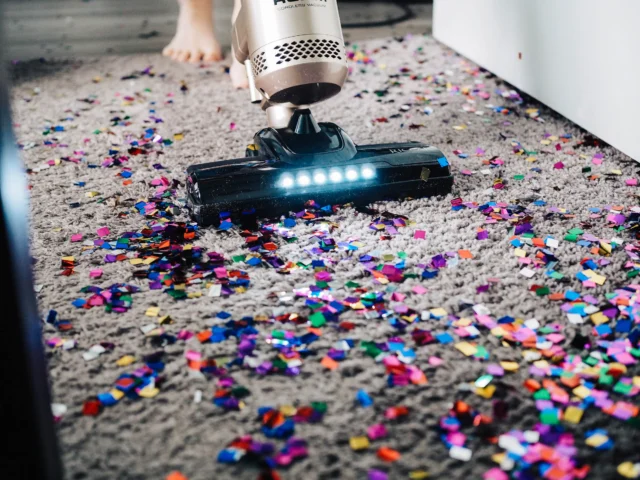
- Use the right vacuum head. A turbo or motorised pet brush lifts hair far better than a plain floor head. Go slowly and vacuum in two directions.
- Go over carpets with rubber first. A damp rubber glove or a rubber-bladed carpet squeegee drags embedded hair into clumps you can pick up or vacuum.
- Dust-mop hard floors before vacuuming. A microfibre mop collects hair instead of blowing it around with the vacuum’s exhaust.
- Protect the sofa. A washable throw on your pet’s favourite spot saves a lot of work. For hair and marks already in the fabric, our sofa cleaning guide explains fabric codes and what’s safe to use.
- Brush your pet outdoors. Regular grooming in the garden means less hair shed indoors.
A vacuum with a sealed system and a HEPA filter also traps fine dander rather than pushing it back into the room, which matters if anyone at home has allergies.
How to get rid of pet odours (not just cover them)
Air fresheners mask pet smells for an hour or two. Getting rid of them means finding the source, which is almost always fabric.
- Wash pet beds, blankets and throws weekly at the hottest temperature the care label allows.
- Sprinkle bicarbonate of soda over carpets and fabric sofas, leave it for a while, then vacuum it up.
- Scoop litter trays daily and wash the tray itself regularly with hot soapy water.
- Clean cages, hutches and pet bowls on a set day each week.
- Open windows when you can; fresh air does more than any spray.
When smells have soaked deep into carpets, surface treatments won’t reach them. Hot water extraction rinses out the base of the fibres, and our guide to hot water extraction vs dry carpet cleaning explains why it suits pet homes. Our carpet and upholstery cleaning service uses this method.
How to clean up pet urine and accidents
Speed matters most. The longer urine sits, the further it soaks into carpet backing and underlay.
- Blot, don’t rub. Press kitchen roll or an old towel firmly onto the patch to soak up as much as possible.
- Rinse with cool water. Hot water can set protein-based stains. Blot again.
- Apply an enzyme cleaner. Biological pet stain removers break down the compounds that cause the smell. Follow the label and leave it for the full time.
- Let it dry naturally. Cover the area if needed so your pet can’t return to it while damp.
Avoid ammonia-based cleaners. Urine contains ammonia, so these products can smell like a familiar spot to your pet and encourage repeat accidents. A UV torch helps find old dried stains you can’t see. For vomit, coffee and other marks, see our guide to removing common carpet stains.
How to stop muddy paws taking over your floors
East Yorkshire winters are wet, and mud travels. A bit of setup at the door saves hours later.
- Create a paw station by the back or front door: an old towel, a washable barrier mat and a bowl of water or a paw-washing cup.
- Wipe paws before they cross the threshold, then keep your dog in the hallway or utility room until they’re mostly dry.
- Let mud dry before tackling it on carpet. Rubbing wet mud pushes it deeper. Once dry, brush it loose and vacuum, then treat any mark that’s left.
- Shake off sand outside after beach walks, and give your dog a brush before coming in.
- Choose washable covers for car seats, dog beds and sofa cushions where possible.
Which cleaning products are safe to use around pets?
Most household cleaners are fine around pets when used as directed, but animals walk on floors, lick their paws and sleep close to surfaces, so a few precautions help:
- Keep pets out of the room until mopped floors and wiped surfaces are completely dry.
- Rinse floors after using strong products, and wash pet bowls separately from cleaning cloths.
- Dilute bleach properly, ventilate the room and keep pets well away while you use it.
- Avoid sprays and diffusers containing essential oils such as tea tree, which can be harmful to pets, particularly cats. Ask your vet if you’re unsure.
- Store all cleaning products in a closed cupboard pets can’t get into.
Our cleaners can use eco-friendly products on request.
Tip: If you use a cleaner, let them know about your pets in advance: whether they’ll be loose or shut in a room, which doors need to stay closed, and any areas to avoid. It makes the visit smoother for everyone, pets included.
A simple routine for cleaning with pets
Pets add mess every day, so a light daily routine beats one big blitz at the weekend.
- Daily: quick vacuum of the main areas pets use, wipe paw prints from the hall floor, scoop the litter tray, wash food and water bowls.
- Two or three times a week: full vacuum including sofas and stairs, mop hard floors.
- Weekly: wash pet bedding and throws, clean the litter tray, wipe skirting boards and doors at nose height.
- Monthly: vacuum under furniture, wash cushion covers, clean the vacuum’s filter and brush roll.
- Once or twice a year: professional carpet and upholstery cleaning.
Help keeping a pet-friendly home clean
Pets make a house a home, but keeping on top of the hair and mud is relentless. Our regular cleaning service sends DBS-checked, insured cleaners who bring their own equipment and know to ask about your pets before they start. You can find out more about regular house cleaning in Hull.
If things have got on top of you, a one-off deep clean gets the house back to a fresh starting point, and then little-and-often keeps it there. Contact our team for a fixed quote.